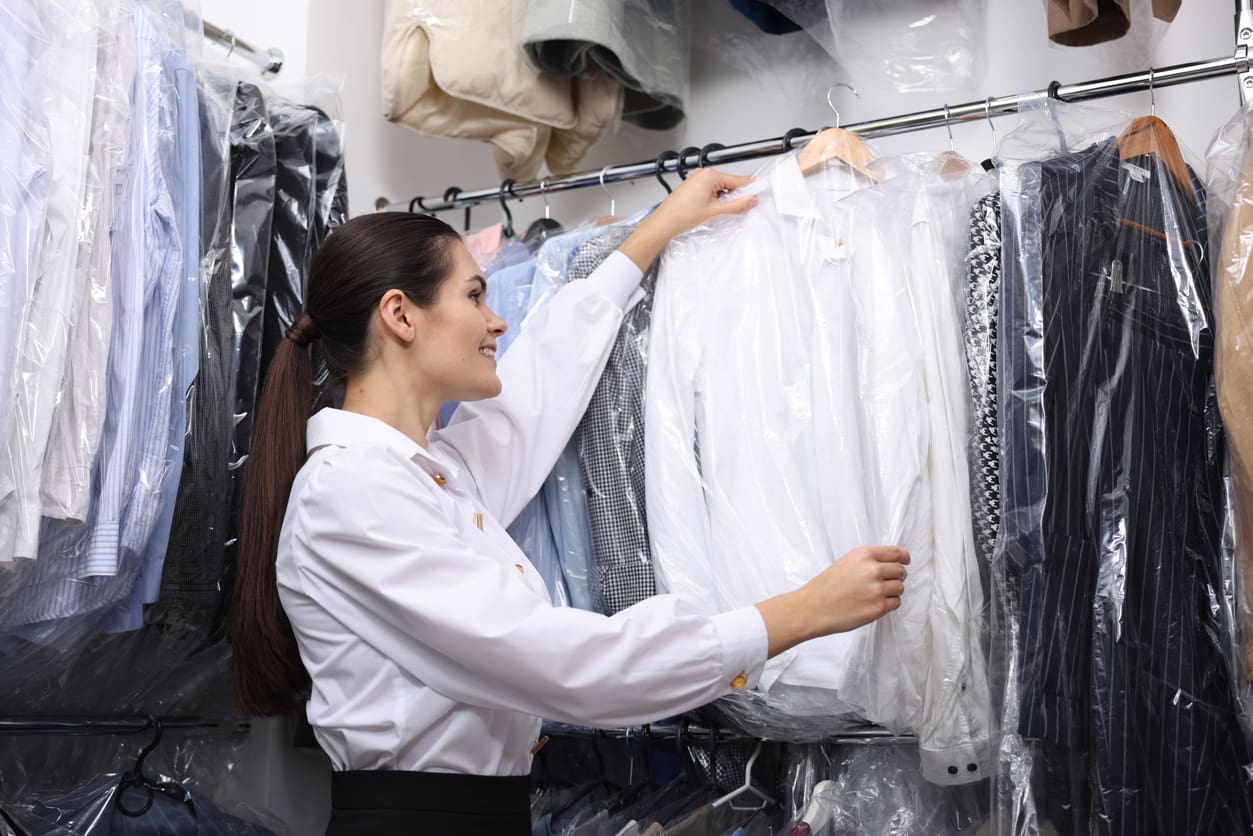
Dry cleaning has changed more in the last 15 years than in the previous 50. New solvents, new equipment, and a lot more openness about what happens to your clothes behind the counter. But most people still picture a dry cleaner the way it was when they were children: a plastic wrapped shirt, a strong chemical smell, no real explanation of the process. That picture wasn't wrong back then. It's just outdated now.
Below are five things people still believe about dry cleaning, where each one came from, and what's actually true at a dry cleaner today.
This one has real roots. Perchloroethylene, known as PERC, was the standard solvent for decades. It works well, but the EPA has tightened regulation around it for years, and older equipment did release more of it than anyone would want today.
That's changed. PERC use has dropped sharply, and shops that still use it typically run closed loop machines that capture and recycle the solvent instead of venting it. Many cleaners have switched to alternative processes entirely. The exposure people picture from twenty years ago isn't the standard experience now, even where PERC is still in use.
You don't need to take any shop's word for it. A few direct questions tell you what you're actually dealing with:
A shop that answers plainly, without hesitation, is usually worth trusting with your clothes.
Once you move past PERC, understanding how dry cleaning works today means recognizing there are a handful of processes doing the heavy lifting in modern shops, and each exists for a different reason.
Not every method suits every fabric, and a shop worth using will match the process to the piece rather than running everything through one machine.
This skepticism is fair, and it comes from a real pattern. Green labels get slapped on packaging across every industry, often with little behind them. Dry cleaning hasn't been immune.
But the tradeoffs here are real, not just marketing. Solvent recovery systems mean less chemical waste than a decade ago. Wet cleaning and CO2 cleaning cut chemical use significantly, though each carries its own water or energy cost.
No process is impact-free, and any cleaner claiming otherwise is overselling. The honest version is that the industry's footprint has genuinely shifted, even if nothing about cleaning clothes at scale is perfectly neutral.
If a shop advertises itself as green, these questions separate substance from a sticker on the window:
A shop with a real answer will usually have one ready.
A $12 charge for a single shirt can feel arbitrary next to tossing a load into your own washer for free. It's easy to assume the price is padded.
It generally isn't. Dry cleaning involves specialized machines, trained pressing staff, and per-garment handling that at-home laundry doesn't require. Each shirt is inspected, cleaned in a batch matched to similar fabrics, then hand pressed on equipment shaped for collars, cuffs, and seams. That labor and equipment cost is built into the price, not added on top of it.
Price differences between shops usually track real differences in process, not just markup.
Breaking down a typical cleaning charge makes the number feel less abstract.
A price list that breaks down charges by garment type and service level, rather than one flat number for everything, is usually a sign of a shop being straightforward about what you pay for. If a shop can explain why a silk blouse costs more than a cotton shirt, that's a good sign the pricing reflects actual work rather than a guess.
This one has some truth to it, which is why it's stuck. Over-cleaning any garment, whether by dry cleaning or home washing, wears down fibers faster than normal wear. Send in a sweater after every wear, and you'll see faster fading and thinning.
Cleaning at an appropriate frequency doesn't cause that damage. In fact, dirt, oil, and sweat left sitting in fabric break down fibers faster than occasional professional cleaning. The issue was never the process. It's how often people use it.
Cleaning too rarely causes its own problems, too. Oils and stains that sit for months become harder to remove and can set permanently.
The label tells you what a manufacturer will guarantee, not the only safe way to clean something. Most people treat dry clean only as a strict rule and everything else as fair game for the home washer.
Modern shops handle plenty of items without that label, using wet cleaning or gentle hand processes that are often easier on fabric than a home machine. A structured cotton dress, a linen jacket, or a delicate knit can all benefit from professional handling, especially if you want it to look sharp for years, not months.
If most of what you know about dry cleaning is a decade or two out of date, that is not on you. It is just how the industry used to look, and we would rather show you than tell you. Pepper Square Cleaners is a family-owned shop in Dallas, and we are the only cleaner in the area that offers same-day service, in by 10:00 a.m. and ready by 2:00 p.m., six days a week, with Pickup and Delivery Service scheduled right from your phone by text.
For anyone searching for dry cleaning near Dallas, Texas, bring in one garment as a first test and see how our Dry Cleaning Service actually works. We serve Dallas, Plano, and Richardson, and we are happy to walk you through exactly what happens to your clothes before you commit to anything.