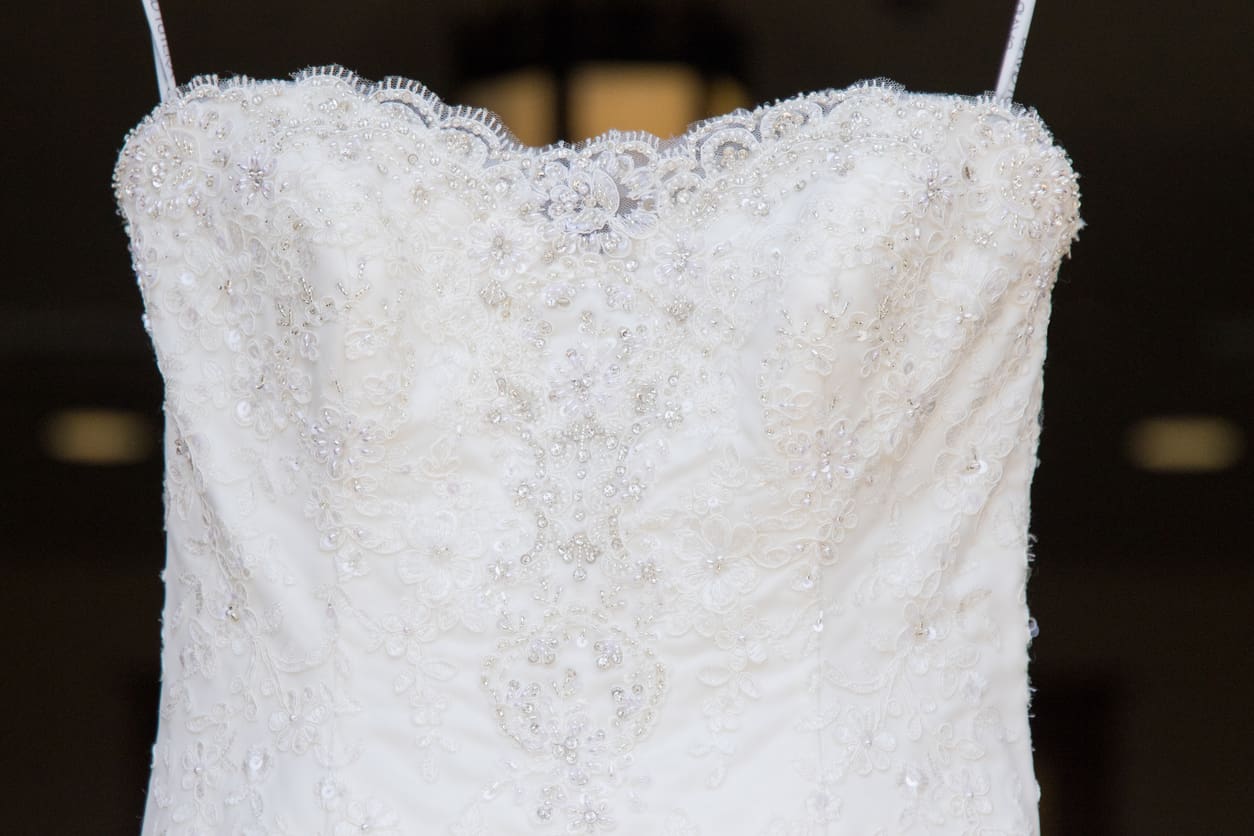
There's a specific feeling that comes with opening a stored wedding dress and seeing something you didn't expect. A yellow tinge. A stiff section. A mark that wasn't there before. The first question is always the same: is this normal? The honest answer is that some of it is expected, some of it is preventable damage that was already underway, and some of it is still fixable if you act now.
This guide tells you which category your dress falls into, sign by sign.
You’re probably noticing it in the underarms, the inside of the waist, the neckline, or along the hem. Not a faint tint, actual yellow or amber discoloration where the fabric touched your skin the most on your wedding day.
The short version: perspiration, body oils, and sugar compounds from food and drinks absorb into the fabric during the event. These soils are colorless when fresh. Over time, they oxidize, a chemical reaction triggered by air, heat, and light exposure- and that oxidation is what produces the yellow color you’re seeing now.
What accelerates it:
What professional wedding dress cleaning can do:
Enzyme-based pre-treatment breaks down oxidizing compounds at the fiber level before the cleaning process begins. Early-stage yellowing, within roughly six months of the wedding, responds well and often clears almost completely. Yellowing that’s been setting for years is harder, but professional cleaning still reduces or eliminates most of it in most fabrics. Waiting longer doesn’t help. Acting now almost always does.
This one is different from yellowing. There’s no concentrated discoloration; the whole dress just looks less crisp than it did. The white or ivory that was vivid on your wedding day now looks flat, faded, or slightly gray.
This symptom usually comes from the storage environment, not from what happened during the wedding.
What this symptom tells you: the dress has been in storage conditions that weren’t ideal, and the longer it stays there, the harder it becomes to predict the outcome.
What professional cleaning can do:
Cleaning removes surface contamination and restores a meaningful amount of the fabric’s original brightness. For significant light-based fading, outcomes are less predictable, and that type of damage is harder to reverse. But cleaning almost always produces a visible improvement over the current state, regardless of cause.
Not yellowing, not dullness, an actual, specific stain. A wine splash. A grass mark from an outdoor ceremony. A makeup transfer at the neckline. Something that either wasn’t noticed at the time or wasn’t fully treated before the dress went into storage.
The chemical state of a stain changes with heat and time:
Here’s the most important thing: if you found a stain today, do not treat it at home before bringing the dress in. No water. No spray. No dabbing. Every home treatment attempt, even a well-intentioned one, changes the stain and can reduce what a professional can do with it.
What’s still treatable:
Most stains that haven’t been heat-set and haven’t been altered by home treatment respond well to professional pre-treatment. Complete removal isn’t guaranteed for every stain, but meaningful improvement almost always is. Bring the dress in as is and let the cleaner assess it directly.
This is the sign most people don’t recognize as deterioration. The dress looks fine at first glance, but when you touch the bodice or hold the hem, it doesn’t feel the way it used to. Something about the texture has changed.
Plastic offgassing and non-archival storage materials leave residue on the fabric surface over time. It accumulates and changes the way the fabric feels, creating a uniform stiffness across an area rather than concentrated in one spot. This is more superficial damage, meaning it sits on top of the fiber rather than inside it, and it tends to respond well to professional cleaning.
Sweat and body oils absorbed into the fabric during the wedding break down fiber structure over time. On silk and satin especially, this shows up as stiffness or brittleness concentrated in high-contact zones like the bodice. This is structural damage at the fiber level. Cleaning can stop it from progressing, but if the fibers have already weakened, some stiffness may remain after treatment.
The reason the distinction matters: if what you’re feeling is residue, professional wedding dress cleaning can restore the texture significantly. If it’s fiber degradation, the goal shifts to halting further damage rather than full reversal. A professional can tell you which one you’re dealing with after an in-person assessment.
You don’t need an appointment to start protecting the dress today. A few immediate steps can stop further damage while you arrange the cleaning.
Write down what you know before you go in:
That information helps the cleaner approach the job correctly from the start, and it can make a real difference in the outcome.
If you’ve spotted yellowing, dullness, a stain you forgot about, or fabric that just doesn’t feel right anymore, the worst thing you can do is wait. The sooner the dress gets into professional hands, the more we can do for it.
At Pepper Square Cleaners, we’ve been caring for wedding gowns since 1979, including gowns from designers like Vera Wang and St. Pucci, trusted to us by boutiques like Neiman Marcus, Stanley Korshak, and Stardust. We take the time to understand exactly what your gown needs before we touch it, and our eco-friendly cleaning process delivers exceptional results without harsh chemicals.
When you bring your dress to us, it’s not just cleaned; it’s handled with the kind of care that keeps it wearable for the next generation.
📍 14902 Preston Road, Suite 902, Dallas, Texas, 75254
🕒 Monday - Friday: 7:00 AM to 6:00 PM | Saturday: 7:30 AM to 5:00 PM | Sunday: Closed