Most “what to wash and what not to wash” guides read like a fabric encyclopedia. Silk needs this, wool needs that- page after page of fiber trivia you're supposed to memorize before you can safely start a load. That's backwards. You don't need to know every fabric on Earth. You need to know how to read the garment in front of you.
Every piece of clothing gives off signals: the label, the fabric, how it's built, what's attached to it, how it feels in your hand. Check these five, and you'll know exactly which clothes should not be machine washed, on any garment, in under 30 seconds.
Care symbols aren't guesses: a dotted square is a temperature, a tub with a hand means hand wash, a tub with an X means don't wash, a circle means dry clean.
What the tag won't tell you: under the FTC's Care Labeling Rule, manufacturers only have to list one safe method, not necessarily the gentlest method. A dry clean only tag can simply be the least expensive instruction to print, not proof your machine would ruin it. Treat the label as a starting point, not the full answer.
Older pieces, resale finds, and hand-me-downs often lose their tag entirely. When that happens, you're not stuck; you just lean harder on the next four signals. Fabric, construction, embellishment, and feel will tell you almost everything the label would have, and sometimes more, since a printed instruction was already someone else's educated guess.
You don't need the full symbol library memorized. Four shapes cover almost everything you'll see on a tag:
If you remember nothing else, remember this pairing: a tub with an X, next to a plain circle. That combination is the label giving you a direct instruction: skip the machine; take it to a professional. It shows up most often on structured or delicate pieces, and it's the clearest single message a garment tag ever sends.
Below the wash symbols, there's usually a line listing fiber content: 100% cotton, or 60% polyester and 40% rayon. This line often matters more than the symbols above it, because fiber type predicts how a fabric behaves in water.
A 50/50 blend won't clearly follow either fiber's rules. Treat it as if the more delicate fiber is in charge. A cotton-silk blend, for instance, should get silk's gentler treatment, since silk is the fiber that's easier to damage.
Cotton and linen are natural and sturdy. Silk and wool are natural and fragile. Polyester and nylon are synthetic and forgiving. Then there's the category that trips people up: rayon, viscose, and acetate. These are manufactured from plant cellulose, so they look and drape like natural fibers, but they lose strength dramatically when wet and can shrink, distort, or dull in a washing machine.
Rayon in particular gets mistaken for cotton by touch alone. The difference shows up the moment it's wet: cotton fibers get stronger when saturated, rayon fibers get weaker. That single fact is why a garment that felt sturdy on the hanger can come out of a normal cycle misshapen, with nothing about how it looked warning you first.
A fabric can be machine-safe, and the finished garment still isn't. Blazers, tailored dresses, and structured skirts often have interior components you never see: canvassing, interfacing, shoulder pads, or boning. These are usually glued or lightly stitched rather than woven into the fabric itself, and machine agitation is exactly the stress that separates them from the shell.
Press your fingers into the lapel of a blazer or the waistband of a structured skirt. If it holds its shape stiffly instead of draping softly, interior structure is doing that work. That stiffness is your cue to hand wash or send it out, regardless of what the outer fabric is rated.
Beading, sequins, embroidery, appliqué, metallic thread, and feathers override every other signal on this list, even if the base fabric is 100% cotton and technically machine safe. Anything decorative that's glued rather than sewn will loosen or drop off in a wash cycle, and even sewn embellishments can snag, tangle, or scratch other clothes in the same load.
Gently flex the fabric near the embellishment. If you can see thread looping through the back, it's sewn and somewhat more durable. If the reverse side is smooth or shows a faint adhesive outline, it's glued, and even a gentle hand wash risks lifting it off.
Experienced launderers rely on this without thinking about it. Dry and crisp, almost papery, means a finish coating that washing will strip for good. Heavier than its size suggests a dense weave that traps water and invites shrinkage. Slippery and snag-prone against rough skin or nails usually means silk, satin, or a fine synthetic.
You won't get this right every time at first, and that's fine. Handle a few garments for which you already know the outcome – a cotton shirt you've washed for years, a silk scarf you've always hand-washed – and notice how differently they feel. That comparison is what turns this signal from a guess into instinct.
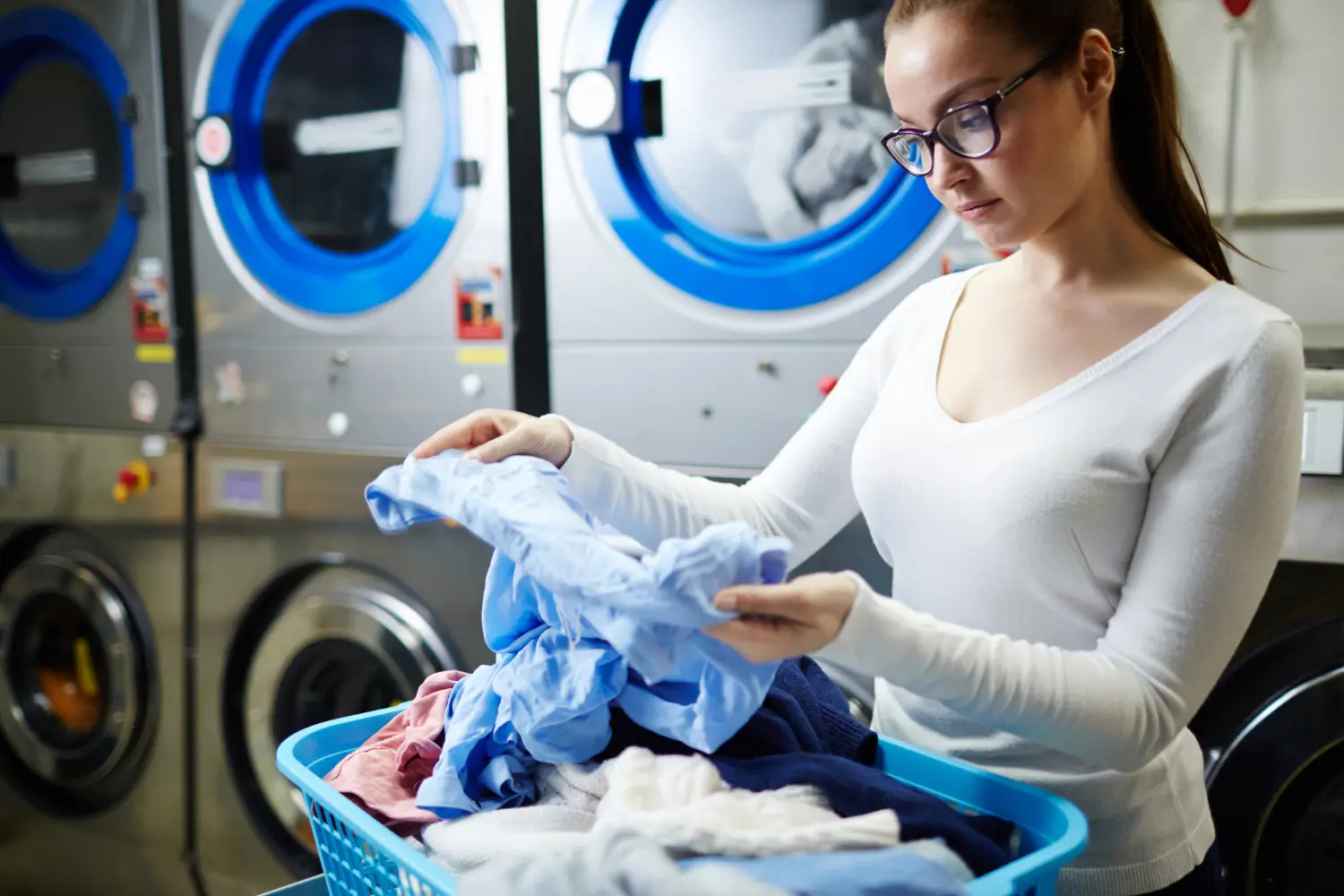
Once you check the five signals, every garment sorts into one of four categories. There's no fifth option and nothing in between, which is what makes this useful in the moment, standing at the machine with a garment in hand. If sorting all of this still feels like more than you want to take on, a wash and fold or laundry service can apply these same signals for you, load after load.
Sorting a hamper by fabric type means knowing a long list of fabrics. Sorting by category means knowing four outcomes. It's a smaller mental list, and it's the same list no matter what actually ends up in the pile.
If a garment sends mixed signals – sturdy fabric but structured construction, for example – default to the more careful category. Over-caring for a garment costs a few extra minutes. Under-caring for it costs you the garment.
Photograph these five steps and save them to your phone, or write them on an index card taped inside a cabinet near your machine. The point of a 30-second check is that it has to be faster to run than it is to skip.
Not every garment gives you a clean answer. If you ran through the five signals and landed on hand wash or professional cleaning, or you checked the label, the fabric, and the construction, and you're still not sure, that's the moment to stop guessing and hand it off.
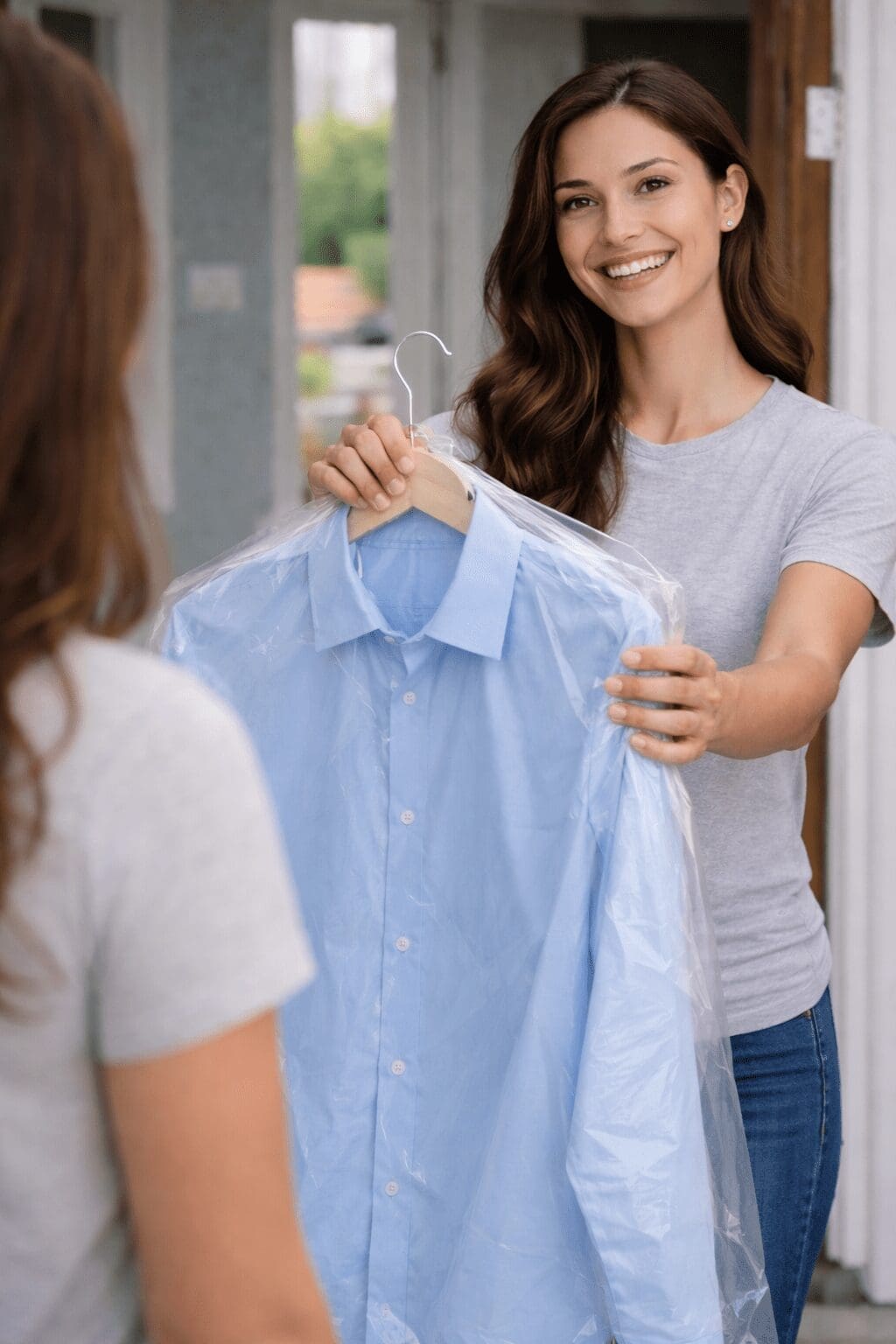
At Pepper Square Cleaners, reading garments like this is what we do all day, every day. Beading, structured linings, delicate blends – our team catches the details easy to miss with a first pass at home, backed by decades of combined experience. Our Wash and Fold Laundry Service takes care of the rest – washed, dried, folded, and ready to put away. Need it back fast? Same-day turnaround is available, and it's why Dallas customers have trusted us for over 20 years.
Drop off your bundle, or skip the trip and schedule a pickup by text; we'll return everything clean and ready to wear.
Address: 14902 Preston Road, Suite 902, Dallas, Texas, 75254
Phone: +1 469-535-7074