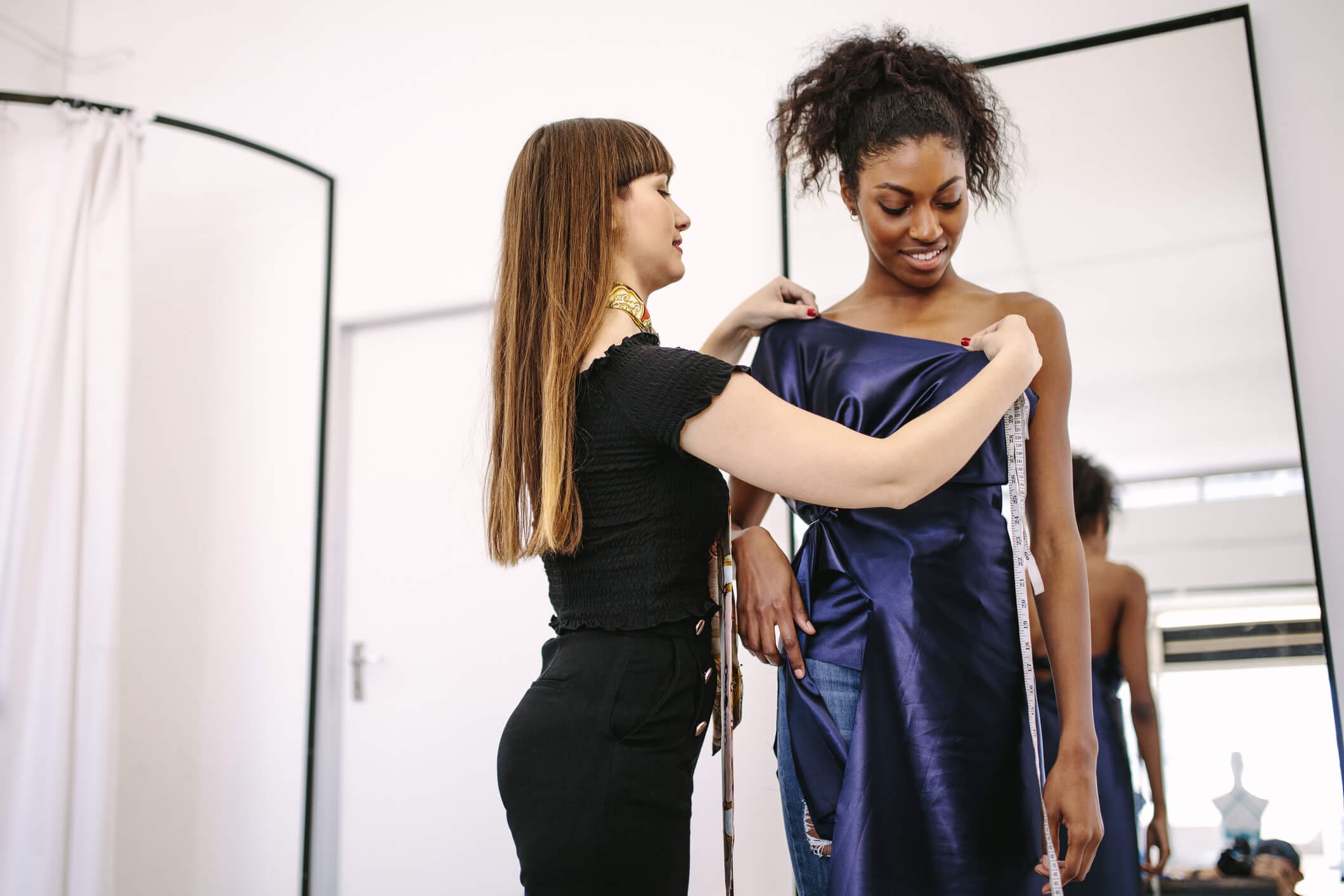
Are alterations worth it? Some garments are worth the trip to a tailor, and some genuinely aren't, and pretending every piece deserves a second chance would make the yeses in this article meaningless.
The actual decision comes down to three things, checked separately rather than blended: if the construction can hold up, if it's worth more than a replacement, and whether or not you actually care about it. Work through those questions one at a time, and the answer that's been stuck for months gets a lot easier to reach.
Before you think about cost or sentiment, check the garment itself. This comes first because it's the only variable that actually determines if an alteration will work, no matter how much you want it to succeed. A tailor can't invent fabric that isn't there. If the construction won't support the change you need, everything else in this guide is beside the point.
You don't need any sewing knowledge to check this. Flip the garment inside out and look at these three areas:
One more thing worth a glance: zippers, buttons, and lining. A broken zipper or a lining that's already separating from the shell isn't a dealbreaker on its own, but it tells you the alteration you're picturing might not be the only repair the garment actually needs.
If a garment fails on two or more of these, that's usually enough to stop here. No amount of sentimental or financial reasoning changes what the fabric can do physically.
What you paid for something is already spent. It has no bearing on today's decision, and holding onto that number is one of the more common reasons this choice feels harder than needed. The number that actually matters is what it would cost you right now to buy something of the same quality and fit.
Sometimes that number is smaller than people expect. A fast-fashion piece that cost very little to begin with might also be inexpensive and easy to replace, which weakens the case for spending money on it.
Other times it's the opposite. A well-made coat or a suit from a brand that's since raised its prices might cost far more to replace today than it did originally, which strengthens the case for altering the one you already own.
Replacement cost is a strong signal, but it isn't the only financial angle worth weighing. A few situations where a low replacement cost doesn't settle the question on its own include:
Financial value is one input, not the whole answer. It's also worth remembering that alteration cost itself scales with the work involved. A simple hem or a button reset is nowhere near the cost of resizing a jacket through the shoulders, so weigh the fix you actually need against replacement cost, not alterations in general.
Genuine attachment is a real reason to alter something, even when the financial math doesn't favor it. A dress from a specific event, a parent's suit, something tied to a certain year of your life. That weight has nothing to do with replacement cost, and it shouldn't.
But sentiment only answers one question, not all three. It doesn't tell you if the construction can hold up, or what a replacement would cost. Treating "I love this" as the whole answer is usually what keeps the decision stuck.
Not everything that feels hard to let go of is actually sentimental. A quick way to check: picture the garment with the alteration already completed. Do you picture wearing it, or just picture yourself keeping it?
There's a fourth factor worth naming honestly, too: the hassle itself. Dropping something off, waiting, picking it back up. Most people picture this as a bigger commitment than it actually is: a single visit to drop off and a single visit to collect – which is usually less involved than people expect.
Some combinations make this an easy call. Good construction, a specific and fixable problem, and a garment you'd genuinely wear if it fit correctly. That's about as close to automatic as this decision gets.
A wool blazer with solid seams that's just slightly too big through the shoulders, a piece you already reach for when it does fit. Construction passes the check, the fix is specific, and the garment already earns its place in your closet. That's a yes without much more thought required.
Give this its due weight, too, because a framework that only produces yeses isn't actually a framework. Poor construction, a fit problem too extensive for one alteration to solve, or a garment you've quietly realized you don't actually like anymore. All legitimate reasons to skip it, regardless of the price tag or how long it's been sitting in your closet.
A thin, synthetic top that needs to be taken in through the whole torso, that you also haven't worn in over a year, even when it did fit. The construction is fragile, the alteration is extensive, and the garment wasn't getting worn anyway. That's a clear no, and there's no reason to feel guilty about it.
Most garments don't land cleanly in the yes pile or the no pile. They sit somewhere in the middle: decent construction, a fit problem that's real but not extreme, and feelings about the piece that are genuine but not overwhelming.
This is where most people actually get stuck, and it's usually not because the facts are unclear. It's because they keep looking for more facts to settle something that isn't really a facts problem.
Here's the question that cuts through it. If this would fit perfectly tomorrow, would you wear it this week?
Don't talk yourself past a hesitant answer. Probably or maybe, for the right occasion, is not the same as yes, and it's more honest than another round of thinking about cost or construction. A garment for which you'd genuinely reach gets an immediate, specific answer: to work, to a wedding, this Friday.
A garment you keep out of guilt or habit gets a vague response. If you find yourself building a hypothetical occasion instead of naming a real one, you already have your answer, and it isn't yes.
If you worked through the questions and decided the garment is worth fixing, or you’re still somewhere in the middle, the next step is simple: have someone take a closer look. A professional assessment can help you understand what’s possible before you commit to the repair.
At Pepper Square Cleaners, alterations have long been part of what we offer as a family-owned business. We look at the construction, condition, and fit of the garment before explaining what the repair or alteration may involve and whether or not it makes sense to move forward. If a repair is unlikely to hold up or deliver the result you’re looking for, we’ll be up front about it.
Bring your garment to Pepper Square Cleaners or give us a call. Let our team take a look and help you decide the best next step. Pickup and delivery are also available, making it easier to get a professional opinion without rearranging your day.
Address: 14902 Preston Road, Suite 902, Dallas, Texas, 75254
Phone: +1 469-535-7074